“How long does SEO take?” It is the first question nearly every business owner asks us, and it deserves a straight answer rather than a shrug. So here it is: most campaigns need four to six months before the movement feels meaningful, and the gains keep compounding well beyond that point.
That answer frustrates people sometimes, and we understand why. You are being asked to invest before you can see the return. But the timeline is not a mystery, and it is not an excuse either. SEO builds in a recognisable shape, and once you know that shape you can hold any agency, including us, properly to account.
This guide expands the timeline from our pillar guide to how SEO works. We will walk through what happens in each phase, what speeds things up or slows them down, which early signals you can trust, and why a promise of page one in 30 days should send you walking the other way.
The short answer
Almost every campaign we run follows the same broad arc. The dates shift with your starting point and your market, but the order never changes.
- Weeks 1 to 4: foundations. The audit, the technical fixes and the quickest wins.
- Months 2 to 3: early signals. Impressions rise and the first keywords start to move.
- Months 4 to 6: meaningful movement in rankings, traffic and enquiries.
- Beyond that: compounding. The work keeps paying long after it is done.
Treat those as honest ranges rather than promises. Nobody controls Google, and anyone who claims otherwise is selling something. What you can control is how well each phase is done, so let us look at what should actually be happening inside them.
What happens in each phase
Weeks 1 to 4: foundations
Everything starts with an audit: crawling the site, checking what Google has indexed, measuring speed, and mapping your content against what people in your market actually search for. Then the fixes begin. Broken pages, indexing problems and other technical SEO issues get resolved first, because they drag on everything else. Alongside that come the quick wins: sharpening page titles, strengthening internal links, and tidying up your Google Business Profile if local visibility matters to you.
You will see little ranking movement during this phase, and that is normal. It is groundwork, and skipping it is how campaigns stall at month four.
Months 2 to 3: early signals
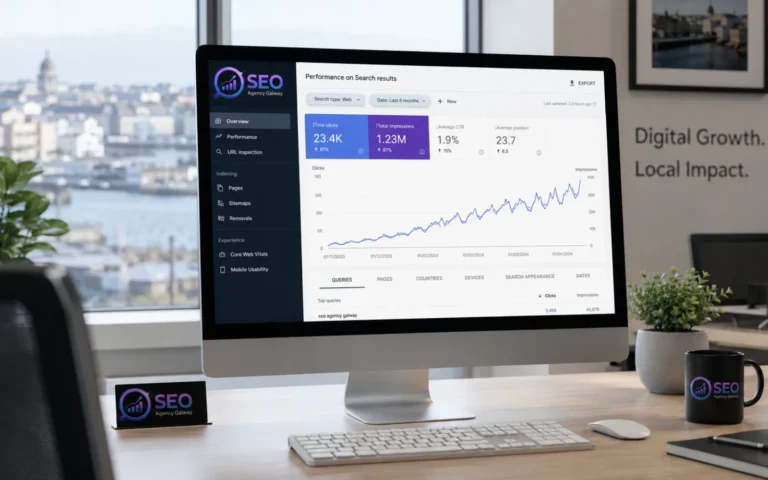
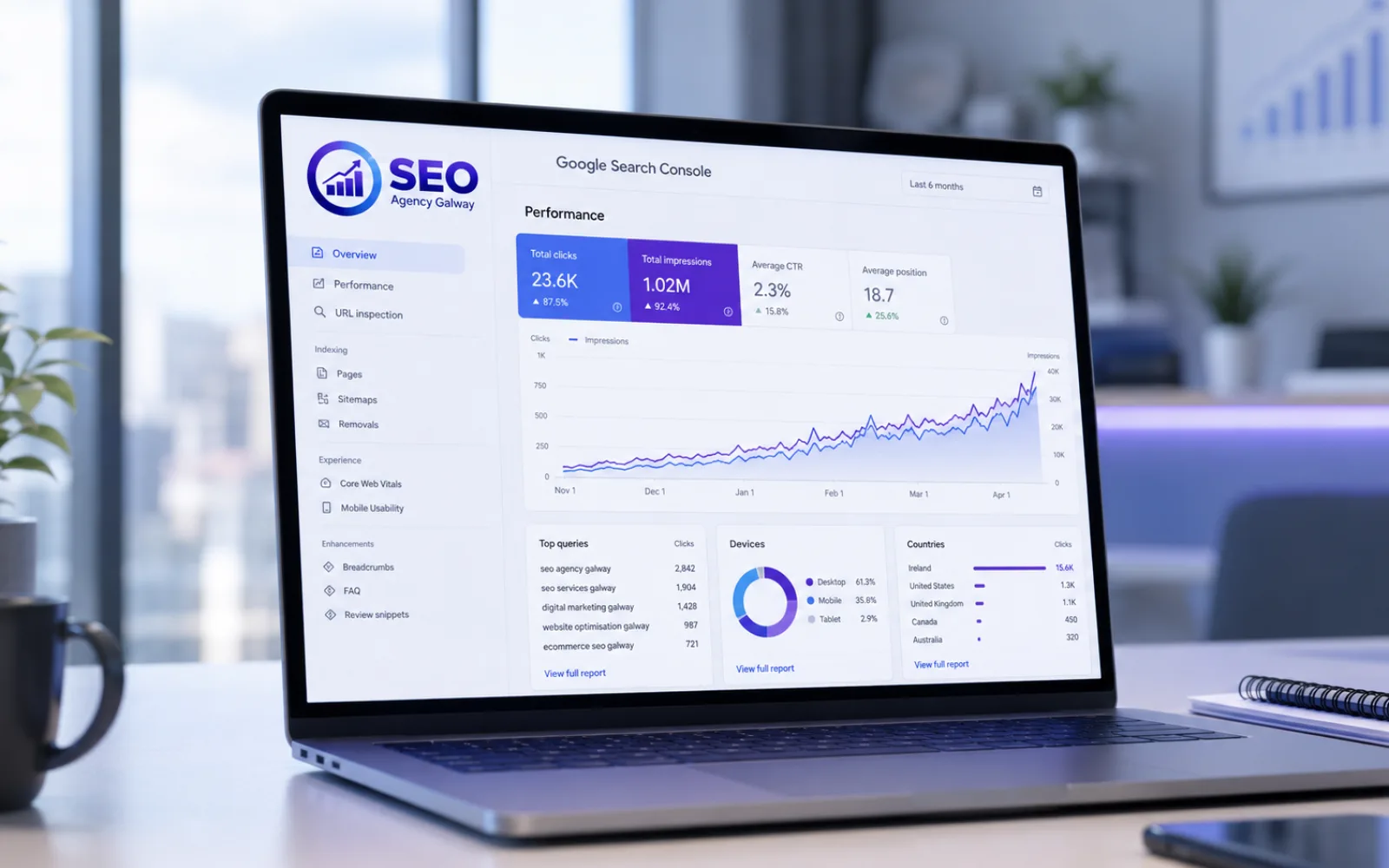
Google recrawls the site and starts responding. Impressions climb in Search Console, more of your keywords appear in the data, and the first positions move, usually on longer and more specific phrases before the competitive ones. Enquiries may not have changed much yet. This is the phase where patience earns its keep, because the signals are real even though the revenue has not caught up with them.
Months 4 to 6: meaningful movement
This is where the doubt usually lifts. Rankings consolidate, traffic climbs, and the enquiries start arriving with it. Content published in the early weeks has matured, links have been earned, and Google now has enough history with the site to trust it with better positions.
After month six: compounding
A page that ranks keeps working without being paid for click by click, which is the quiet advantage SEO holds over ads. Each new page also benefits from the authority the earlier work built, so it tends to settle into position faster. The longer the work runs, the better the economics get.
What speeds it up, and what slows it down
Four factors explain most of the difference between a quick campaign and a slow one.
- Starting authority: an established site with history and links moves faster than a brand-new domain.
- Competition: a local trade term and a national money term are different races entirely.
- Content pace: the faster you can publish and improve pages, the sooner things move.
- Site health: unresolved technical problems drag on everything else you do.
You cannot change your competition, but you can change the other three. A brand-new domain simply sits at the patient end of every range, while an established local business with a healthy site often sees the early phases move more quickly. If budget forces a choice, fix site health first and keep the content pace steady, because both are fully within your control.
Early signals worth trusting, and the noise to ignore
The first quarter of a campaign is judged on leading signals, not revenue. The ones worth trusting: impressions climbing steadily in Search Console, more keywords entering the data each month, new pages getting indexed promptly, movement on specific long-tail phrases, and the first enquiries that mention finding you through Google. Together, those tell you the machine has started turning.
The noise: day-to-day rank wobble, a single keyword dipping for a week, and pretty charts with no connection to enquiries. Positions naturally bounce around, and judging a campaign on any one day’s snapshot will drive you mad. We cover which numbers actually deserve your attention in how to measure SEO success.
Why “page one in 30 days” is a red flag
If honest timelines run in months, what about the firms promising page one in 30 days? One of three things is true. They are targeting terms nobody searches for, where page one is easy and worthless. They are using shortcuts that can earn a penalty and take your existing rankings down with them. Or they are simply promising something nobody can deliver, because no agency controls Google’s results.
No one can guarantee a ranking, and Google itself warns against firms that claim to. A promised position is not a stronger offer than an honest range; it is a warning sign. We have written up exactly why in can you guarantee SEO rankings.
An honest starting point
Every timeline in this guide starts from the same place: knowing where your site stands today. That is what our free SEO audit is for. It shows you what is working, what is holding you back, and roughly where you sit on the ranges above, with no obligation attached. And if you are still weighing up whether to start at all, is SEO worth it is the honest self-assessment.
If you want the full picture of what the work involves before you talk to anyone, our guide to how SEO works explains the whole process in plain English. Read it first and you will ask better questions of any agency you meet, including us.